It’s the quiet half-hour of the morning, right after he’s left for work, that the house takes on a different tone. I was wiping down the kitchen counter, a mindless, automatic motion, when it struck me that I’ve been studying a single, silent conversation for months. It’s in the patterns, you see. I’ve been unintentionally documenting a language without a word being said. It’s all in the coffee mug.
Every morning, I get up first. I make the coffee, black and strong. I’ll pour my own first, and then, using the same pot, I’ll fill his travel thermos to the very top, just as he likes it. I never think about it; it’s just what I do. I place the full thermos on the center of the table.
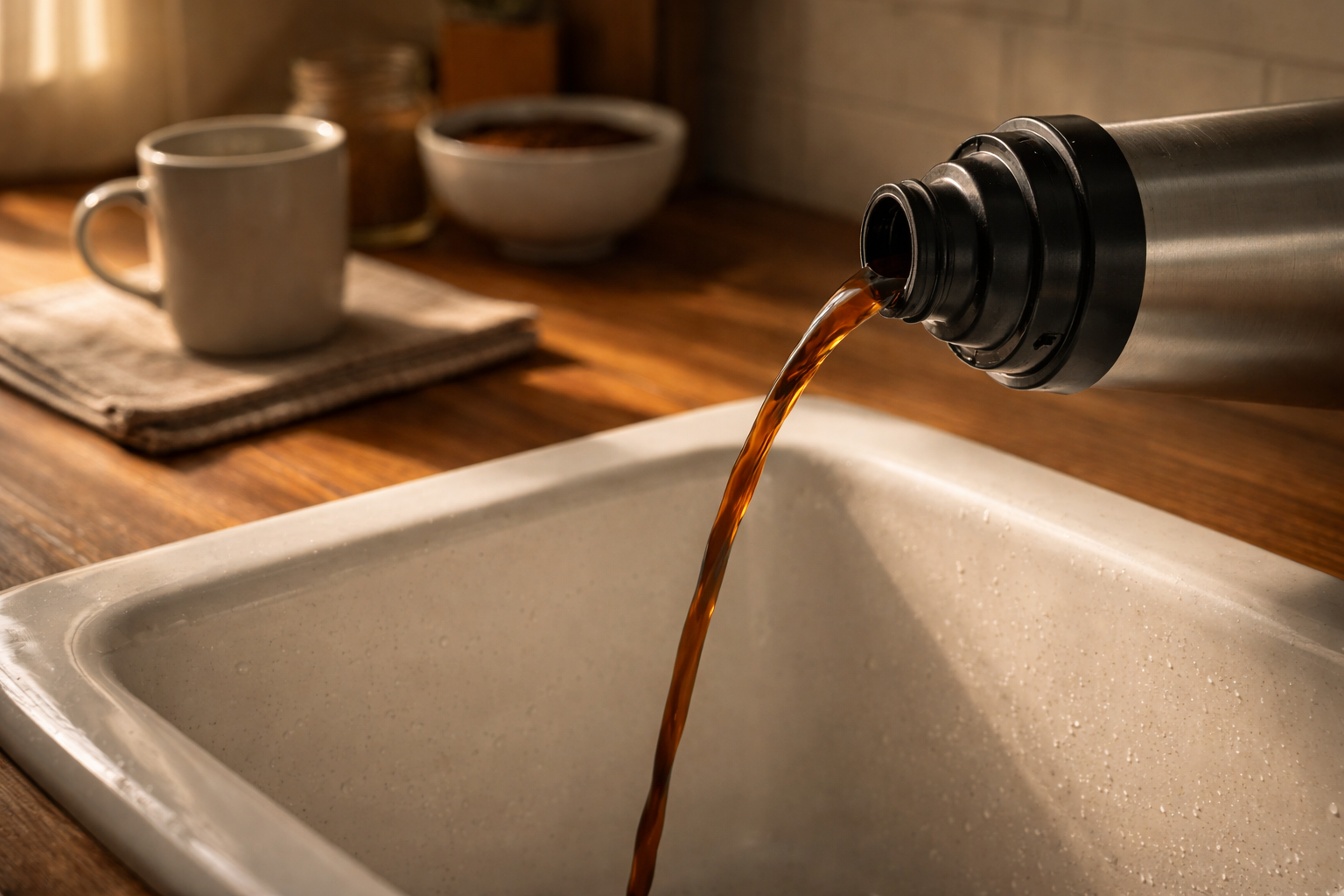
He comes down, opens the thermos, and pours a small amount, maybe a quarter-cup, into the sink. Then, and only then, does he fill his travel mug and screw the lid on tight. For months, I just accepted this. He never complained. I never asked. It was just a small, silent piece of our morning ballet.
Today, I finally saw the pattern. I didn’t plan it, but my hand was still. I was wiping the counter, my own coffee cooling beside me, and I watched. He came in, took the thermos, and went to the sink. And I saw it. That small pour into the sink wasn’t random. It was a measurement of air. I’d been filling the thermos to the absolute brim, leaving no room for expansion. He wasn’t pouring out coffee—he was making just enough space so the coffee wouldn’t leak when the hot liquid expanded from the movement of his drive. He was creating pressure relief, a pocket of air he could control.
It’s a tiny thing. It means nothing and everything. I’ve been filling it too full out of a kind of abundance, a desire to give as much as possible. He’s been carefully, silently, creating the necessary void for the system to function. I was giving a gesture of fullness; he was performing the quiet, practical math of physics and movement. I’d mistaken his precision for a critique of my effort, but it was never about the gift. It was about the space left for it. I think that might be the heart of it. I’ve been so focused on the pouring, I never saw the need for the space in between. Maybe the most functional things—a good thermos, a good routine, a good partnership—aren’t just about the parts that are full, but about the precise, calculated emptiness that holds the full parts together. I’ll leave a little more space tomorrow.