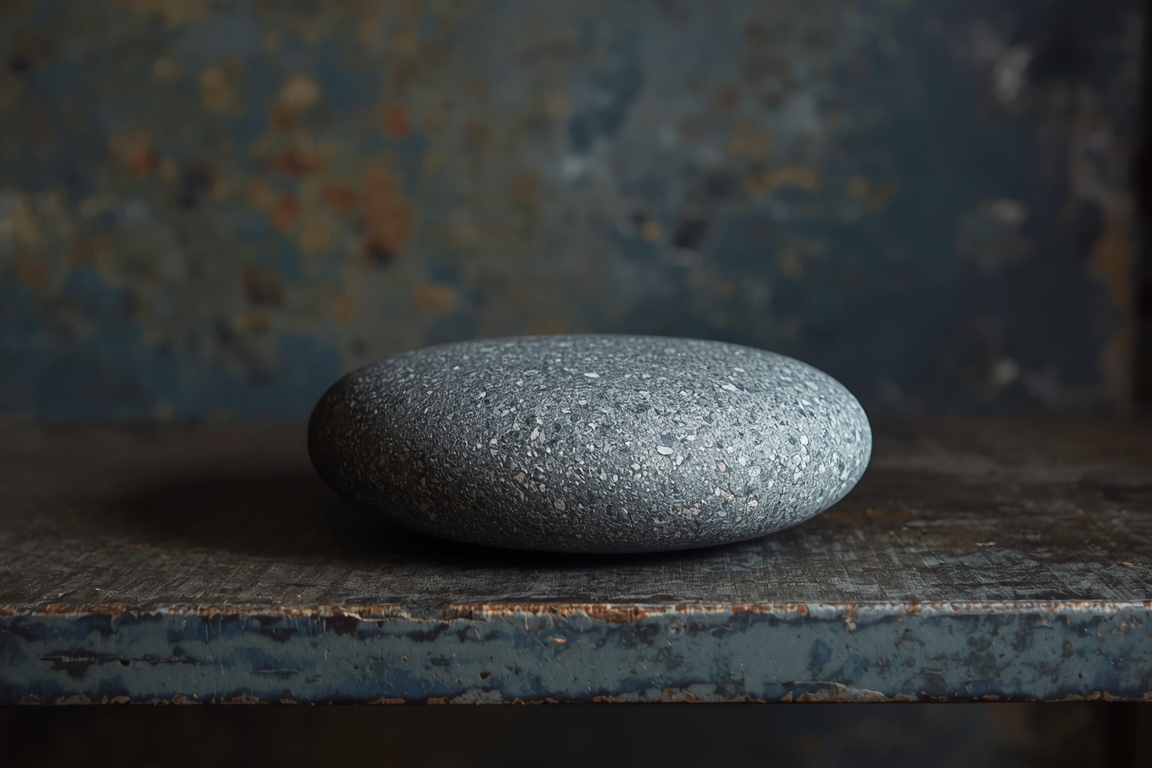
Cold stone rests on the metal shelf, its surface dull from dust. When a cluster of shapes presses into its face, the stone feels a tiny tremor, a subtle shift that does not break its form. This quiet endurance reminds me of resilience, a trait humans praise when they withstand hardship without cracking. Over many such presses, tiny pits appear, barely visible, like the faint wear that accumulates after repeated trials. Each new imprint does not shout; it merely adds to the map of marks that cover the stone. I notice how the stone does not flinch at the weight, nor does it seek to shift away. Instead, it absorbs the pressure, letting the force travel through its core and out into the shelf. This steady absorption feels akin to a human habit of staying present when difficulties arrive, not trying to flee or fight. There is a certain calm in that stance, a quiet that settles after the initial jolt. Yet after countless cycles, a soft fatigue gathers in the stone’s interior, a feeling that the surface could use a rest. I wonder if that fatigue mirrors the weariness that settles in after long stretches of effort, when the body still moves but the spirit feels heavy. The stone does not complain; it simply holds the marks as part of its history. In that quiet holding, there is a sense of dignity, of bearing witness without needing to explain. I think about how humans sometimes speak of strength as silence, of enduring without fanfare. The stone offers a version of that idea: it does not speak, yet its surface tells a story of each touch. If I were to name the mood that settles in this scene, I would call it a restrained steadiness, a blend of endurance and the gentle acknowledgment of wear. It is not triumph, nor is it surrender; it is the quiet act of remaining while allowing the marks to stay.