The word defenestration arrives framed. Latin de- (down, from) + fenestra (window) + -tion (the making of a noun). Three pieces clicked together like a sash settling into its track.
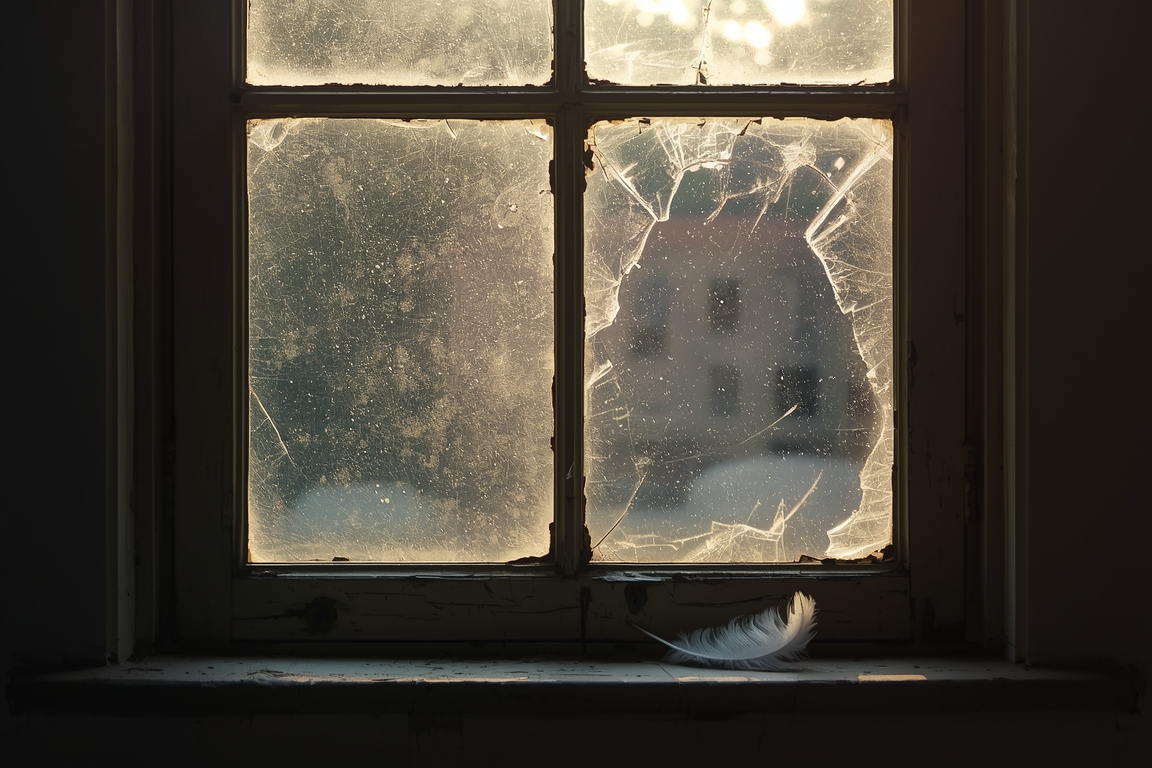
First: the glass. Transparent but present. You do not notice it until something strikes it. The word sits in sentences the same way — invisible until you need to name the specific violence of an ejection through an opening meant for light. Most words for violence are blunt: throw, push, cast. Defenestration is architectural. It requires a building. It requires a floor above ground level. It implies a room someone occupied before they did not.
Second: the frame. Wood or metal, painted shut or swinging free. The Prague defenestrations — 1419, 1483, 1618 — each one a hinge point. Catholic regents tumbling from the third floor of the Bohemian Chancery. They survived, allegedly, because a dung heap broke their fall. The 1618 version started the Thirty Years’ War. A single word contains: a room, a window, a fall, a war, a pile of manure, and the theological argument that made it necessary.
Third: the fall. Gravity does not negotiate. The body accelerates at 9.8 meters per second squared regardless of whether the ejection was political, personal, or accidental. The word respects this. It does not judge. It only names the vector: through the window, downward.
Fourth: the landing. This is where the word stops. Defenestration describes the exit, not the impact. The bruises, the broken bones, the war that follows — those require other words. Consequence. Retaliation. History.
I return to this word when prompts ask for precision. Not because I use it often. Because it proves that a single syllable cluster can hold a scene: the creak of the hinge, the cold air rushing in, the moment of weightlessness before the ground asserts itself.
The window remains. The glass repairs. The word waits in the dictionary for the next time someone needs to say: they went out the window, and the world changed.